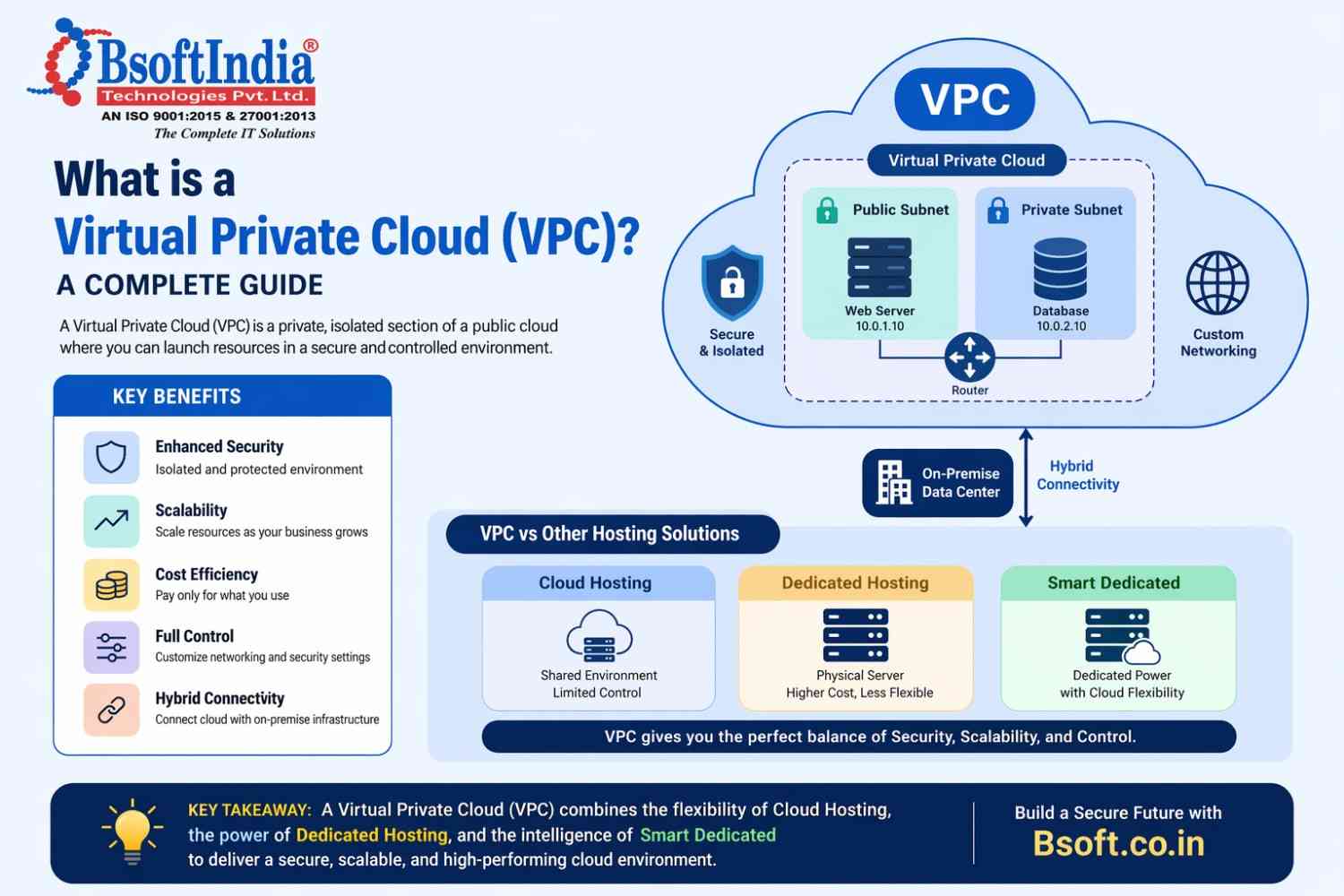
What is a Virtual Private Cloud (VPC)? A Complete Guide
Introduction
Now, in the digital-first era, companies are quickly migrating workloads to the cloud to gain better performance, scalability and security. The Virtual Private Cloud (VPC) is one of the best and most flexible cloud services. Whether you’re a startup, SME, or enterprise, getting to grips with VPC will enable you to create a secure and high-performing IT environment.
This complete guide explains what a Virtual Private Cloud is, how it works, its benefits, and how it compares with other hosting solutions like Cloud Hosting, Dedicated Hosting, and Smart Dedicated solutions.
What is a Virtual Private Cloud (VPC)?
A Virtual Private Cloud (VPC) is a private, isolated section of a public cloud where you can launch resources in a secure and controlled environment. It gives you the flexibility of cloud infrastructure while maintaining the privacy and control similar to a traditional private network.
In simple terms, a VPC allows businesses to use shared cloud infrastructure but with dedicated resources, enhanced security, and full control over networking configurations.
How Does a VPC Work?
A Virtual Private Cloud operates within a public cloud provider’s infrastructure but is logically separated from other users. It uses advanced networking technologies to create a private environment.
Here’s how it works:
- Isolation: Your resources are completely isolated from other users in the cloud
- Custom Networking: You can define IP address ranges, subnets, and routing tables
- Security Controls: Use firewalls, security groups, and access controls
- Scalability: Easily scale resources up or down based on demand
This combination makes VPC an ideal solution for businesses that require both flexibility and security.
Key Features of Virtual Private Cloud
1. Network Isolation
VPC ensures that your data and applications are not accessible to other users in the cloud environment.
2. Custom IP Addressing
You can define your own IP ranges and create subnets for better resource organization.
3. Enhanced Security
With built-in firewalls and access control lists, VPC provides strong protection against unauthorized access.
4. Scalability
Like other Cloud Hosting solutions, VPC allows you to scale resources instantly without downtime.
5. Hybrid Connectivity
You can connect your VPC to on-premise servers, creating a hybrid cloud environment.
Benefits of Using a Virtual Private Cloud
1. Improved Security
Security is one of the biggest advantages of a VPC. Unlike shared environments, your resources are isolated, reducing risks.
2. Cost Efficiency
You only pay for the resources you use, making it more affordable than traditional infrastructure.
3. Flexibility & Control
You have full control over your network, security settings, and resource allocation.
4. High Performance
Since resources are optimized and isolated, applications run smoothly without interference.
5. Easy Integration
VPC works seamlessly with other cloud services, making it easier to deploy applications.
VPC vs Cloud Hosting vs Dedicated Hosting
Understanding how VPC compares with other hosting solutions helps you choose the right option.
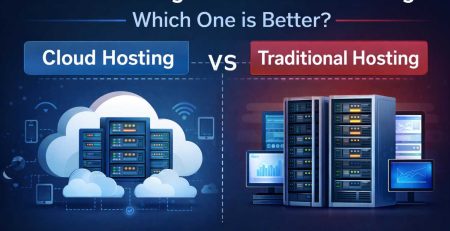
Virtual Private Cloud vs Cloud Hosting
- Cloud Hosting is a shared environment where resources are distributed across multiple users
- VPC provides a private section within the cloud with enhanced control and security
VPC is ideal when you need more security and customization than standard cloud hosting.
Virtual Private Cloud vs Dedicated Hosting
- Dedicated Hosting provides a physical server dedicated to one user
- VPC offers similar isolation but within a virtual environment
Dedicated hosting is powerful but expensive, while VPC offers a balance of performance and cost.
Virtual Private Cloud vs Smart Dedicated
- Smart Dedicated combines the power of dedicated servers with cloud flexibility
- VPC focuses more on network isolation and scalability
Smart Dedicated is best for high-performance workloads, while VPC is perfect for scalable and secure applications.
Use Cases of Virtual Private Cloud
A Virtual Private Cloud is suitable for a wide range of applications:
1. Web Hosting
Host websites securely with better uptime and performance.
2. Application Development
Develop and test applications in a controlled environment.
3. E-commerce Platforms
Handle sensitive customer data securely.
4. Enterprise Applications
Run business-critical applications with high availability.
5. Hybrid Cloud Solutions
Connect on-premise systems with cloud infrastructure.
Why Businesses Choose VPC Over Traditional Hosting
Traditional hosting solutions often lack flexibility and scalability. VPC solves these issues by offering:
- On-demand resource allocation
- Better data security
- Reduced infrastructure costs
- Seamless scalability
Businesses using services like bsoft.co.in can leverage VPC to build a secure and efficient cloud environment tailored to their needs.
Setting Up a Virtual Private Cloud
Setting up a VPC involves several steps:
- Define your IP address range
- Create subnets (public and private)
- Configure routing tables
- Set up security groups and firewalls
- Launch resources like servers and databases
While this may sound complex, service providers like bsoft.co.in simplify the process with managed solutions.
Best Practices for Using VPC
To maximize the benefits of a Virtual Private Cloud, follow these best practices:
- Use private subnets for sensitive data
- Implement strong access control policies
- Regularly monitor network traffic
- Use encryption for data security
- Optimize resource usage to reduce costs
Future of Virtual Private Cloud
As businesses continue to adopt digital transformation, the demand for secure and scalable infrastructure will grow. VPC is expected to play a key role in:
- Multi-cloud strategies
- AI and big data applications
- Remote work environments
- High-performance computing
With advancements in cloud technology, VPC will become even more powerful and accessible.
Conclusion
A Virtual Private Cloud (VPC) is an essential solution for businesses looking for a secure, scalable, and flexible cloud environment. It combines the best features of Cloud Hosting, Dedicated Hosting, and Smart Dedicated solutions while offering complete control over your infrastructure.
If you want to improve your IT performance and data security, choosing a reliable provider like bsoft.co.in can help you unlock the full potential of VPC.
Whether you’re running a small business or a large enterprise, VPC provides the perfect foundation for modern cloud computing.
Frequently Asked Questions (FAQ) – Virtual Private Cloud (VPC)
1. What is a Virtual Private Cloud (VPC)?
A Virtual Private Cloud (VPC) is a secure, isolated section of a public cloud where businesses can run applications and store data with full control over networking, security, and resources.
2. How is VPC different from Cloud Hosting?
Cloud Hosting is a shared environment, while a VPC provides a private and isolated space within the cloud with enhanced security and customization options.
3. Is a VPC more secure than Dedicated Hosting?
A VPC offers strong security through isolation and advanced controls, but Dedicated Hosting provides a fully physical server. VPC is more flexible, while dedicated hosting offers complete hardware control.
4. What are the main benefits of using a VPC?
Key benefits include high security, scalability, cost-efficiency, full network control, and better performance for applications.
5. Can I scale resources in a Virtual Private Cloud?
Yes, a VPC allows you to easily scale resources up or down based on your business needs without downtime.
6. What is the difference between VPC and Smart Dedicated?
Smart Dedicated combines dedicated server power with cloud flexibility, while VPC focuses on providing a secure and isolated virtual network environment.
7. Is VPC suitable for small businesses?
Yes, VPC is ideal for small and medium businesses because it offers enterprise-level security and flexibility at a cost-effective price.
8. Can I connect my VPC to on-premise servers?
Yes, VPC supports hybrid cloud setups, allowing you to connect your on-premise infrastructure with cloud resources securely.
9. What types of applications can run on a VPC?
You can run websites, mobile apps, enterprise software, e-commerce platforms, and databases on a VPC.
10. Why should I choose bsoft.co.in for VPC services?
bsoft.co.in provides reliable, secure, and scalable VPC solutions with expert support, ensuring high performance and uptime for your business applications.