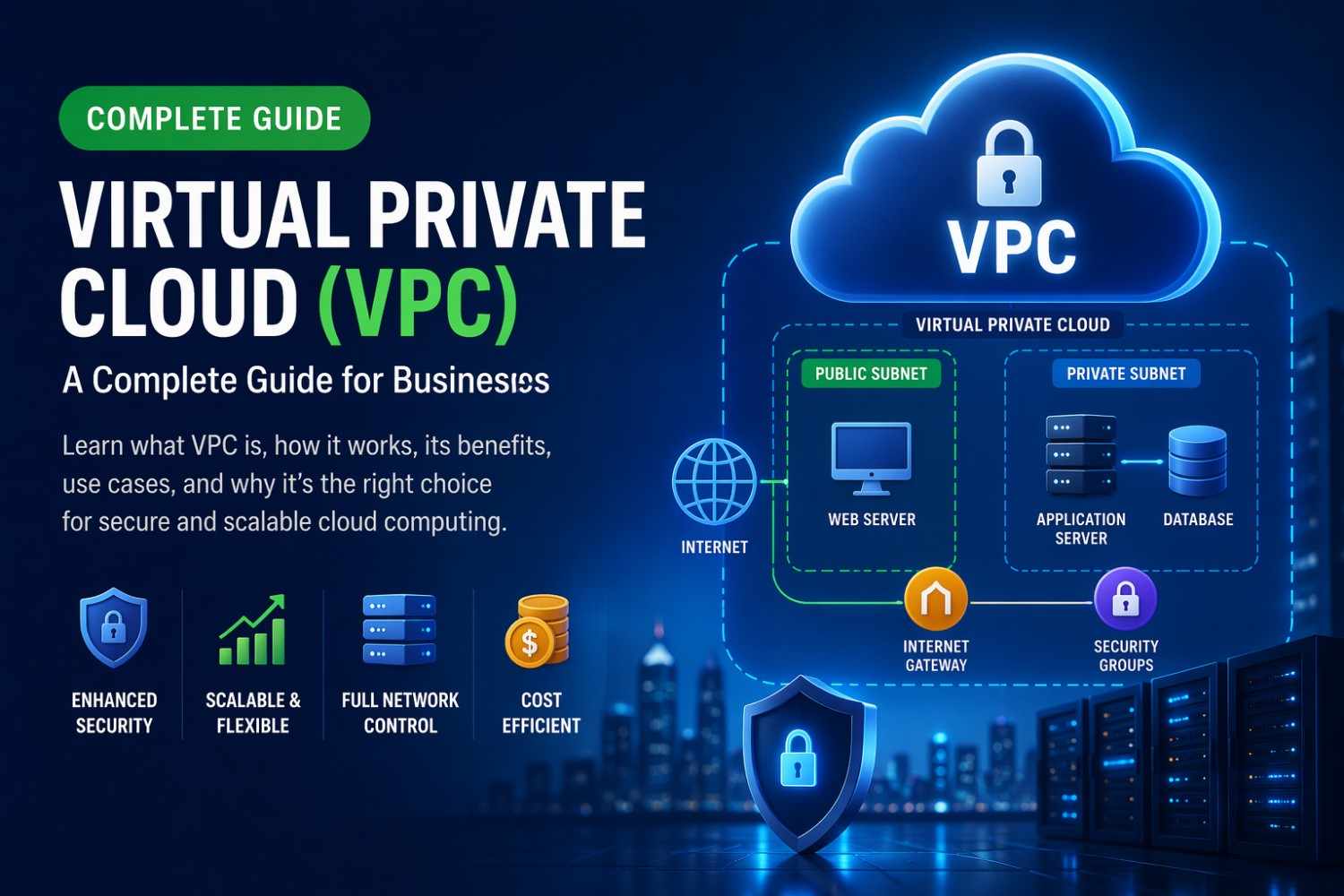
Virtual Private Cloud (VPC) – A Complete Guide for Businesses
Introduction
In the digital-first world of today, enterprises require cloud solutions that can be secure, flexible, and scalable. This is the role of a Virtual Private Cloud (VPC). With a VPC, organizations benefit from the cloud computing model, but with a level of control comparable to that of a private network.
Whether you’re running accounting software, hosting applications, or handling sensitive information, a VPC allows you to keep your operations secure and running smoothly. bsoft.co.in is a software company offering next generation Cloud solutions to meet the business needs of today.
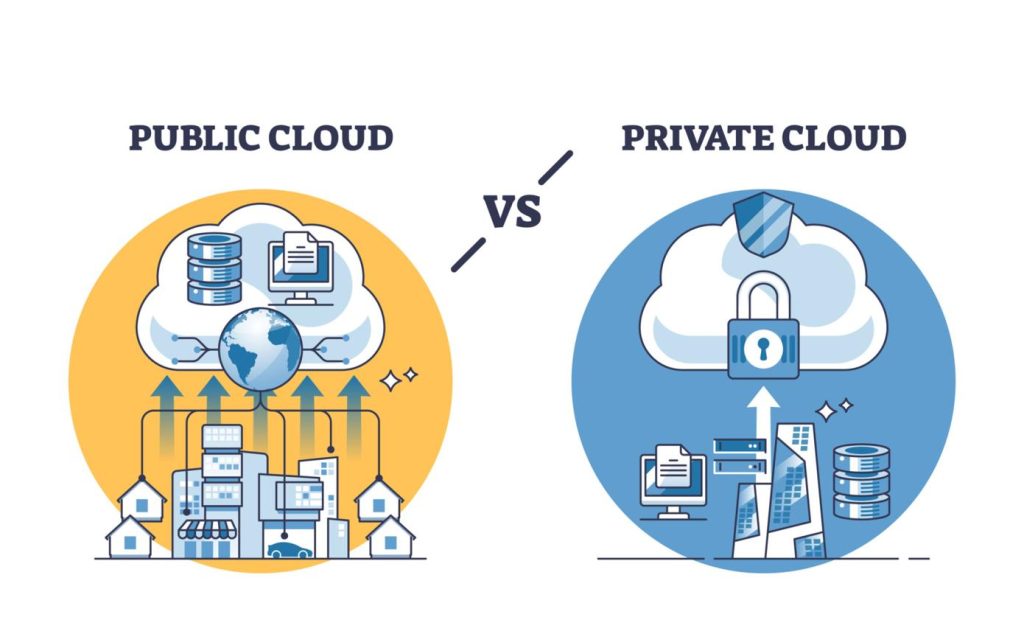
What is a Virtual Private Cloud (VPC)?
A Virtual Private Cloud (VPC) is a private cloud that is hosted on the public cloud. It enables organizations to run applications and store data while managing workloads in their own protected virtual environment.
Unlike shared public cloud environments, a VPC gives you:
- Dedicated virtual network space
- Custom IP address ranges
- Subnets and routing control
- Advanced security configurations
In simple terms, it’s like having your own private section inside a public cloud.
Key Features of Virtual Private Cloud
1. Greater Security
VPCs provide multiple layers of security such as:
- Firewalls
- Encryption
- Private IP address access
- Secure VPN connections
That feature renders it perfect for companies that process secret information.
2. Complete Network Control
Set up:
- IP ranges
- Subnets
- Route tables
- Gateways
This control level provides better traffic management and guarantees an optimal performance.
3.Scalability
- With a VPC, it is simple to perform these tasks:
- Add and Delete Resources Scale Servers on Demand Scale servers on demand
- Deal with traffic surges without downtime
4. Cost Efficiency
Since you are only charged for what you consume/comsume, VPC is a more economical option than the physical infrastructure.
Benefits of Using Virtual Private Cloud
Enhanced data security
Your data is kept separate from that of other users, minimizing the possibility of breaches.
High Performance
Dedicated resources provide faster processing and better application performance.
Remote Accessibility
You can log into your system from anywhere, ideal for telecommuters!
Customization
Customise your cloud environment to meet your business needs.
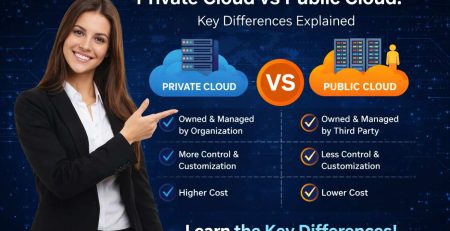
VPC vs Public Cloud vs Private Cloud
| Feature | VPC | Public Cloud | Private Cloud |
| Security | High | Moderate | Very High |
| Cost | Medium | Low | High |
| Control | High | Limited | Full |
| Scalability | High | Very High | Moderate |
A VPC offers the perfect balance between security and cost, making it a popular choice for businesses.
Use Cases of Virtual Private Cloud
1. Hosting Business Applications
Run your enterprise resource planning (ERP), customer relationship management (CRM), and accounting systems securely.
2. Data Backup & Disaster Recovery
Store your backups in a secure, off-site location.
3. Web Hosting
Host your websites with better security and uptime.
4. Development & Testing
Develop isolated development environments for developers, without any impact on live systems.
Why Choose VPC for Your Business?
A Virtual Private Cloud is the right choice for you if you:
- Process sensitive customer or financial information
- Require secure access while on the road
- Desire more control of your infrastructure
- Are growing your business quickly
With vendors such as bsoft.co.in, enterprises can roll out high-powered VPC solutions boasting 99.9% uptime along with cutting edge protection.
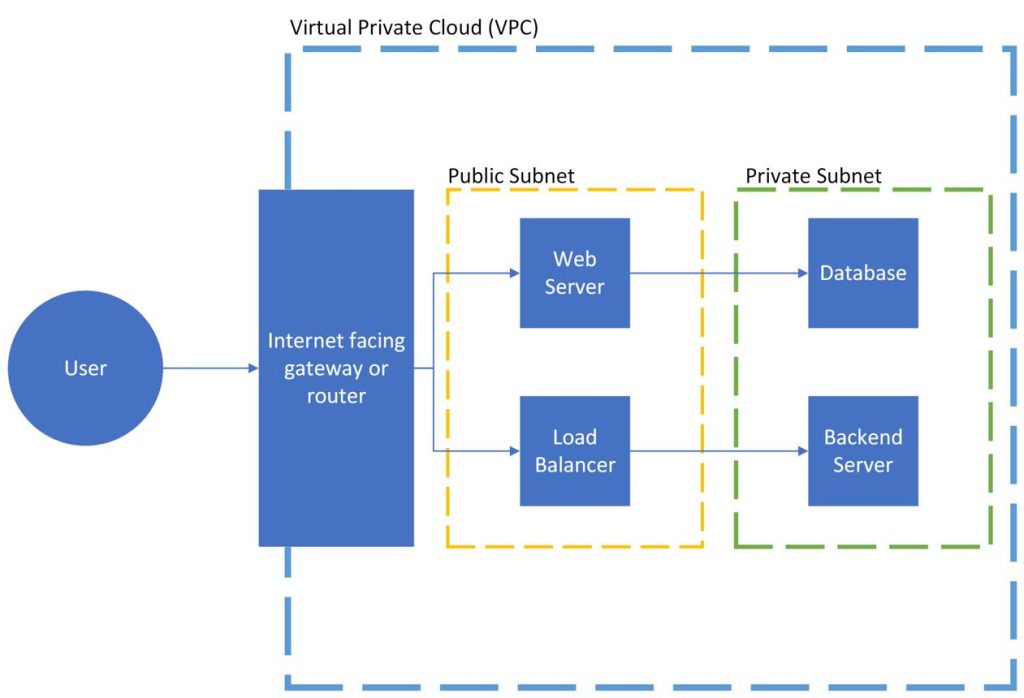
How VPC Works
A Virtual Private Cloud is the right choice for you if you:
- Process sensitive customer or financial information
- Require secure access while on the road
- Desire more control of your infrastructure
- Are growing your business quickly
With vendors such as bsoft.co.in, enterprises can roll out high-powered VPC solutions boasting 99.9% uptime along with cutting edge protection.
Future of Virtual Private Cloud
VPC adoption has been rapidly increasing in pace with the growing cyber threats and remote work tendencies. Companies are moving to hybrid and multi-cloud environments, in which VPC has become essential. Technologies such as AI, automation, and advanced monitoring are making VPCs even more powerful and efficient.
Conclusion
A VPC is a great option for businesses that need a secure, flexible, and high performing environment. It is a layer that sits on top of a public cloud to provide private cloud-like features such as security.
For a secure and scalable cloud-based solution, selecting a reliable supplier as bsoft.co.in is always the best choice to realize the full power of cloud computing.
FAQs
1. What do you want to know about virtual private clouds?
A VPC offers a secure and private space to run your apps and store data in the public cloud.
2. Is VPC better than public cloud?
Yes, you can expect more security and control from VPC than a traditional public cloud.
3. Can small businesses use VPC?
Definitely! VPC has a reasonable pricing and can scale up and down very well, which suit for any size of business.
4. Is VPC secure?
Yes, VPC is layered with security such as firewalls, encryption, and private networks.
5. How do I create a VPC?
You can create a VPC via cloud providers or opt the management service from providers such as bsoft.co.in.