
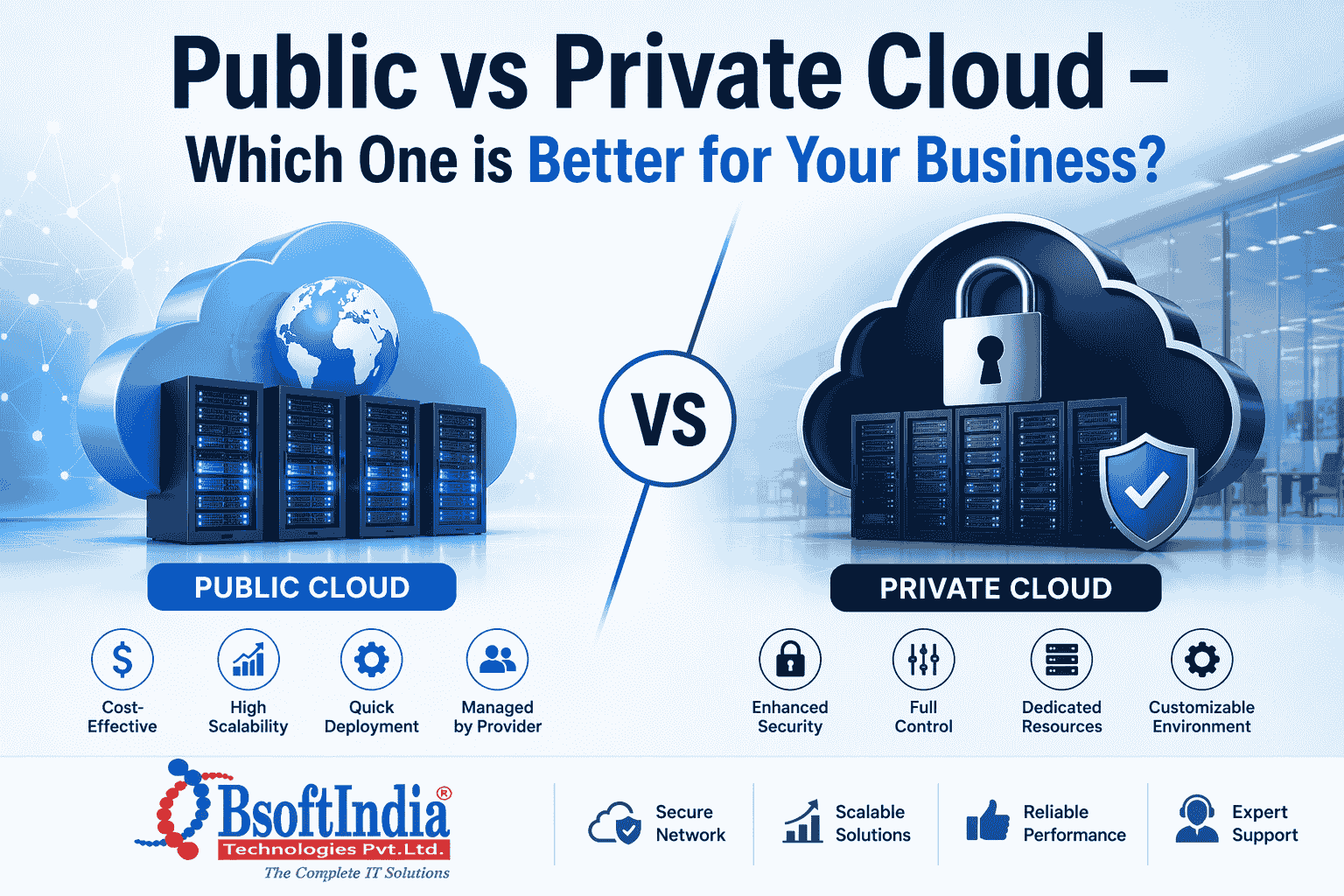
Public vs Private Cloud – Which One is Better for Your Business?
Introduction
In today’s rapidly evolving digital landscape, businesses are aggressively moving towards cloud computing to increase efficiencies, scale, and performance. But one question still gets asked above all others: Public vs Private Cloud – which is better for your business?
Understanding the difference between Public Cloud, Private Cloud, and even Hybrid Cloud models is essential before making the right decision. In this guide by bsoft.co.in, we’ll break down everything in simple terms to help you choose the best cloud solution for your needs.
What is Public Cloud?
A Public Cloud is a cloud computing model where services are delivered over the internet and shared among multiple users or organizations. Popular examples include platforms like AWS, Microsoft Azure, and Google Cloud.
Key Features of Public Cloud:
- Shared infrastructure
- Pay-as-you-go pricing
- High scalability
- No maintenance required
Benefits of Public Cloud:
Public Cloud is ideal for startups and small businesses because it is cost-effective and easy to set up. You don’t need to invest in hardware, and you can scale resources anytime.
Limitations:
Since resources are shared, businesses with strict security or compliance needs may find Public Cloud less suitable.
What is Private Cloud?
A Private Cloud is a cloud environment dedicated to a single organization. It can be hosted on-premises or managed by a third-party provider like bsoft.co.in.
Key Features of Private Cloud:
- Dedicated infrastructure
- Enhanced security
- Customizable environment
- Greater control
Benefits of Private Cloud:
Private Cloud is perfect for businesses that deal with sensitive data such as financial institutions, healthcare providers, or large enterprises.
Limitations:
It requires higher investment and maintenance compared to Public Cloud.
What is Hybrid Cloud?
A Hybrid Cloud combines both Public Cloud and Private Cloud environments, allowing data and applications to be shared between them.
Key Features of Hybrid Cloud:
- Flexible deployment
- Balanced cost and security
- Workload optimization
Benefits of Hybrid Cloud:
Hybrid Cloud allows businesses to keep sensitive data secure in a Private Cloud while using the Public Cloud for scalability and cost savings.
Public vs Private Cloud – Key Differences
| Feature | Public Cloud | Private Cloud |
| Cost | Low (pay-as-you-go) | High (dedicated setup) |
| Security | Moderate | High |
| Scalability | Very High | Limited (depends on hardware) |
| Control | Less control | Full control |
| Maintenance | Managed by provider | Managed by organization/provider |
Which One is Better for Your Business?
Choosing between Public Cloud and Private Cloud depends on your business requirements. Here’s a simple breakdown:
Choose Public Cloud if:
- You are a startup or small business
- You need cost-effective solutions
- You want quick deployment
- Your workloads are not highly sensitive
Choose Private Cloud if:
- You handle sensitive or confidential data
- You need high security and compliance
- You want full control over infrastructure
- You run enterprise-level applications
Choose Hybrid Cloud if:
- You want the best of both worlds
- You need flexibility and scalability
- You want to optimize costs while maintaining security
Why Choose bsoft.co.in for Cloud Solutions?
At bsoft.co.in, we provide tailored cloud solutions including Public Cloud, Private Cloud, and Hybrid Cloud services to meet your business needs.
What You Get:
- High-performance cloud infrastructure
- 99.9% uptime guarantee
- Affordable pricing plans
- Expert support team
- Secure and scalable solutions
Whether you’re a startup or an enterprise, bsoft.co.in helps you choose and implement the right cloud strategy for long-term success.
Final Thoughts
There is no one-size-fits-all answer when it comes to Public vs Private Cloud. Each model has its own advantages and use cases.
- Public Cloud is best for cost and scalability
- Private Cloud is best for security and control
- Hybrid Cloud offers a balanced approach
The right choice depends on your business size, budget, and data sensitivity.
If you’re still unsure, the experts at bsoft.co.in are ready to guide you in selecting the perfect cloud solution tailored to your needs.
FAQs
1. What is the main difference between Public Cloud and Private Cloud?
Public Cloud uses shared infrastructure, while Private Cloud is dedicated to a single organization.
2. Is Private Cloud more secure than Public Cloud?
Yes, Private Cloud offers higher security because it is isolated and customizable.
3. What is Hybrid Cloud used for?
Hybrid Cloud is used to combine security and scalability by using both Public and Private Cloud environments.
4. Which cloud is cheaper?
Public Cloud is generally more affordable due to its pay-as-you-go model.