
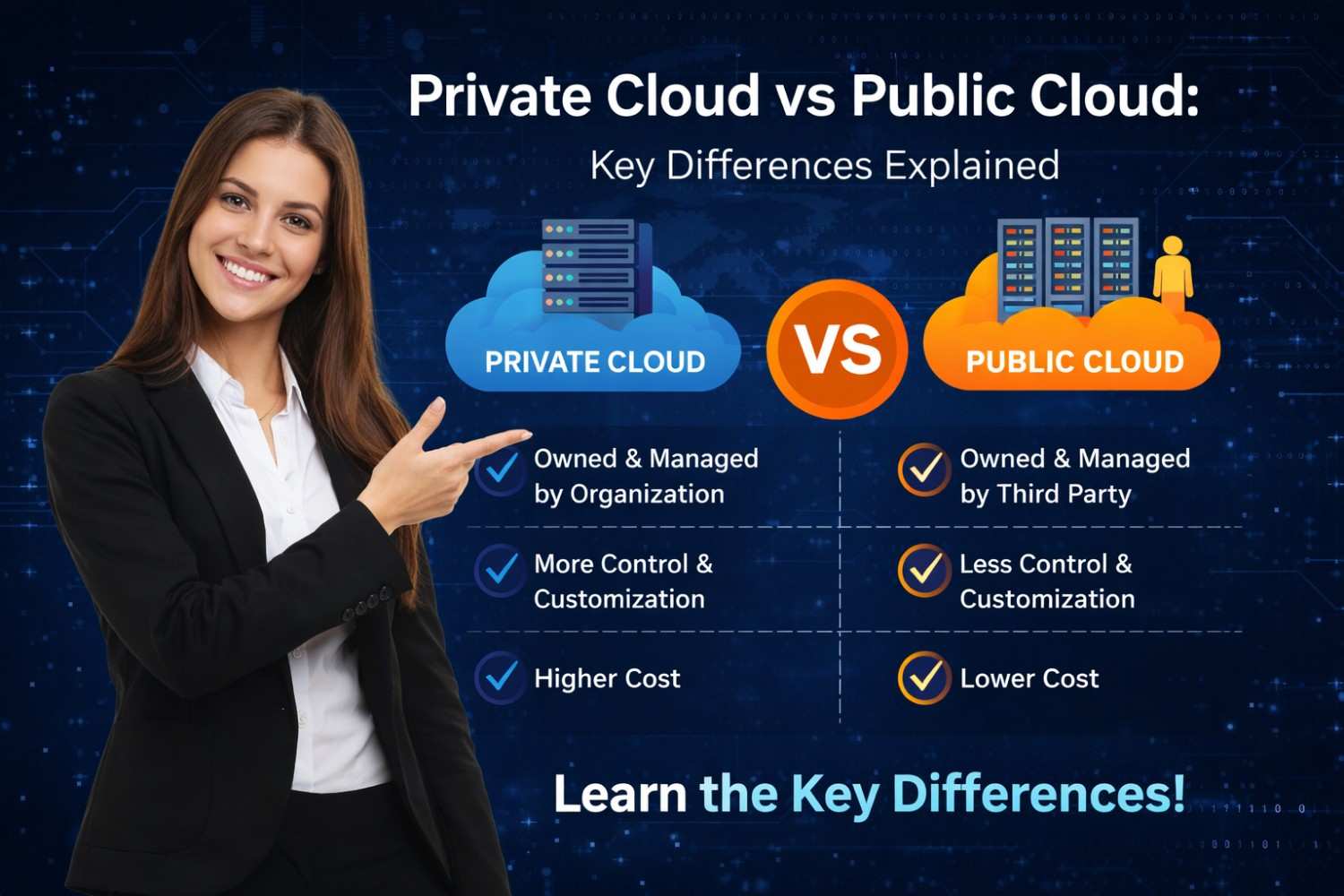
Private Cloud vs Public Cloud: Key Differences Explained
Introduction
Digital world, businesses of all sizes are moving their operations to the cloud. But with multiple cloud options available, understanding the differences between private and public clouds is essential. Companies like bsoft.co.in help organizations navigate this complex landscape and choose the right solution for their needs. In this article, we will break down the key differences between private and public clouds, discuss hybrid cloud solutions, and highlight how cloud-based services like Busy on Cloud and Tally On Cloud can transform business operations.
What is a Private Cloud?
A private cloud is a cloud computing environment dedicated to a single organization. Unlike public clouds, which are shared among multiple users, a private cloud provides exclusive resources and infrastructure. It can be hosted on-premises or in a data center managed by a third-party provider.
Key Features of Private Cloud
- Exclusive Access: Only your organization can access the private cloud resources, which ensures high security.
- Customizable Infrastructure: You can tailor the hardware and software according to your business needs.
- Enhanced Security: Private clouds offer advanced security measures, including firewalls, encryption, and access control.
- Compliance-Friendly: Suitable for businesses handling sensitive data, like finance, healthcare, and government sectors.
Private clouds are ideal for businesses that prioritize control and security over cost. bsoft.co.in provides private cloud solutions tailored for such organizations, ensuring secure and efficient operations.
What is a Public Cloud?
A public cloud is a cloud environment where multiple organizations share computing resources, such as servers and storage, managed by a cloud provider. Popular public cloud providers include Amazon Web Services (AWS), Microsoft Azure, and Google Cloud Platform (GCP).
Key Features of Public Cloud
- Cost-Effective: Pay-as-you-go pricing models reduce infrastructure costs.
- Scalable: Easily scale up or down based on your business requirements.
- Managed Services: The cloud provider handles maintenance, security updates, and upgrades.
- Global Accessibility: Access your applications and data from anywhere with an internet connection.
Public clouds are best suited for businesses that need flexibility and lower upfront costs. Services like Busy on Cloud and Tally On Cloud leverage public cloud infrastructure to provide secure, accessible accounting solutions for businesses.
Private Cloud vs Public Cloud: Key Differences
To make the right choice, businesses need to understand the differences between private and public clouds across several parameters.
1. Cost
- Private Cloud: Higher initial investment because you own or lease the infrastructure.
- Public Cloud: Lower upfront cost; pay only for the resources you use.
2. Security
- Private Cloud: Offers advanced security features; ideal for sensitive data.
- Public Cloud: Provides standard security measures, but shared infrastructure may pose risks.
3. Control
- Private Cloud: Full control over hardware, software, and policies.
- Public Cloud: Control is limited; you rely on the provider for infrastructure management.
4. Performance
- Private Cloud: Dedicated resources ensure consistent performance.
- Public Cloud: Shared resources may lead to occasional performance variability.
5. Scalability
- Private Cloud: Scaling may require additional investment in hardware and infrastructure.
- Public Cloud: Highly scalable with minimal effort; ideal for fluctuating workloads.
Hybrid Cloud: The Best of Both Worlds
A hybrid cloud combines private and public cloud environments, allowing businesses to leverage the benefits of both. For example, sensitive data can be stored on a private cloud while less critical applications run on a public cloud.
Benefits of Hybrid Cloud
- Flexibility: Choose where to deploy applications based on cost, security, and performance.
- Scalability: Handle spikes in demand by using public cloud resources.
- Cost Efficiency: Optimize spending by balancing private and public cloud usage.
bsoft.co.in offers hybrid cloud solutions that integrate seamlessly with tools like Busy on Cloud and Tally On Cloud, giving businesses full control over their cloud environment while maintaining cost efficiency.
Why Choose Cloud-Based Accounting Tools
Cloud computing has transformed how businesses manage their finances. Tools like Busy on Cloud and Tally On Cloud allow companies to access their accounting software from anywhere, reducing dependency on local servers.
Busy on Cloud
- Cloud-based version of Busy Accounting Software.
- Real-time access to data for multiple users.
- Secure, fast, and compatible with hybrid cloud setups.
Tally On Cloud
- Enables remote access to Tally ERP solutions.
- Reduces IT infrastructure costs.
- Integrates easily with private, public, or hybrid cloud models.
These solutions are particularly valuable for businesses that require high availability, security, and collaboration.
How bsoft.co.in Helps Businesses with Cloud Solutions
bsoft.co.in specializes in providing end-to-end cloud solutions. Here’s how they support businesses:
- Private Cloud Setup: Secure and dedicated infrastructure tailored to your organization.
- Public Cloud Integration: Cost-effective, scalable cloud environments for dynamic workloads.
- Hybrid Cloud Solutions: Combine private and public clouds for optimal performance and cost-efficiency.
- Cloud Accounting Tools: Setup and support for Busy on Cloud and Tally On Cloud.
- Ongoing Support: Maintenance, updates, and monitoring to ensure smooth operations.
With expertise in all types of cloud environments, bsoft.co.in makes cloud adoption simple and reliable for businesses of any size.
Choosing the Right Cloud for Your Business
When deciding between private, public, or hybrid cloud, consider the following:
- Data Sensitivity: Private cloud for sensitive data; public cloud for general workloads.
- Budget: Public cloud reduces upfront costs, while private cloud may have higher investment.
- Scalability Needs: Public and hybrid clouds offer easier scaling.
- Compliance Requirements: Industries like finance and healthcare often require private cloud solutions.
- Software Needs: Cloud-based accounting tools like Busy on Cloud and Tally On Cloud work best on scalable cloud infrastructure.
bsoft.co.in guides businesses through this decision-making process, ensuring the cloud solution aligns with operational goals.
Conclusion
Understanding the differences between private and public clouds is crucial for businesses looking to embrace digital transformation. Private clouds offer control and security, public clouds provide cost-efficiency and scalability, and hybrid clouds combine the best of both worlds.
Cloud-based solutions like Busy on Cloud and Tally On Cloud, supported by bsoft.co.in, make it easier than ever to manage business operations remotely and efficiently. Choosing the right cloud model can save costs, improve performance, and enhance security, setting the stage for future growth.
Whether your business is looking for a fully private cloud, a scalable public cloud, or a hybrid solution, partnering with experts like bsoft.co.in ensures a smooth, secure, and productive cloud journey.
1. What is the difference between a private cloud and a public cloud?
A private cloud is dedicated to a single organization, offering high security, control, and customization. A public cloud is shared among multiple users and managed by a provider, offering cost efficiency and easy scalability. bsoft.co.in provides solutions for both, helping businesses choose based on their needs.
2. Which cloud is better for small businesses?
For small businesses with limited budgets, a public cloud is often better because it reduces upfront infrastructure costs. Tools like Busy on Cloud and Tally On Cloud make public cloud solutions even more efficient for accounting and business operations.
3. Can I use both private and public clouds together?
Yes, that’s called a hybrid cloud. It allows sensitive data to stay in a private cloud while using the public cloud for less critical workloads. bsoft.co.in specializes in creating hybrid cloud environments for maximum flexibility and efficiency.
4. Are cloud accounting tools secure?
Yes. Tools like Busy on Cloud and Tally On Cloud use encryption, secure login, and other advanced measures to protect your data. For businesses handling sensitive financial data, these tools work well with both private and hybrid cloud solutions.
5. How does scalability differ between private and public clouds?
- Private Cloud: Scaling requires additional hardware and setup, which may take time and money.
- Public Cloud: Scaling is easy and can be done instantly based on your needs. Hybrid cloud solutions allow you to balance both approaches efficiently.
6. Which industries benefit most from private cloud?
Industries dealing with sensitive data, like finance, healthcare, and government sectors, benefit most from private clouds. Companies can maintain compliance while keeping data secure.
7. Can I run Tally or Busy software on a cloud?
Yes! Both Tally On Cloud and Busy on Cloud allow you to access accounting software remotely, collaborate with teams in real time, and integrate easily with private, public, or hybrid cloud environments.
8. Why should I choose bsoft.co.in for cloud solutions?
bsoft.co.in offers end-to-end cloud services, including setup, migration, and ongoing support for private, public, and hybrid clouds. They also specialize in implementing cloud-based accounting solutions like Busy on Cloud and Tally On Cloud, ensuring a secure and smooth experience.
9. Is hybrid cloud more expensive than public cloud?
Not necessarily. While hybrid cloud can involve costs for private cloud infrastructure, it allows businesses to optimize spending by using the public cloud for scalable workloads and reserving private cloud for sensitive data.
10. How do I get started with cloud solutions?
Start by evaluating your business needs, data sensitivity, and scalability requirements. bsoft.co.in can guide you in choosing between private, public, or hybrid cloud and help set up cloud-based solutions like Busy on Cloud and Tally On Cloud efficiently.

