
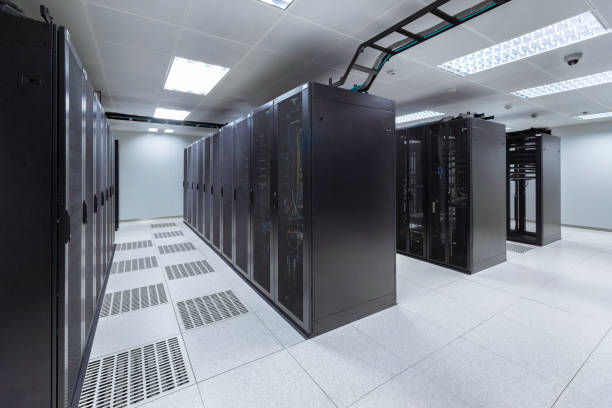
A colocation facility (colo) is a data center or telecommunications facility in which a business can rent space for servers, storage devices and other computing and networking hardware.
Typically, a colo provides the building, cooling, power supply, voice and data network bandwidth, internet access and physical security, while the customer provides servers, storage and network devices. It can support all or part of an IT infrastructure, ensuring that customer business needs are addressed.
Space in a colo facility is typically leased by the rack, cabinet, cage or room. Many colos have extended their offerings to include managed services that support their customers’ business initiatives. These include internet access, wide area network services, metropolitan area network services, change management, security management and disaster recovery (DR).
Who needs a colocation facility?
Organizations of virtually any size can use a colo facility to provide primary IT operations and carrier-neutral network services. They also use them to augment an existing IT infrastructure on a temporary basis or for a longer term as business needs dictate.
There are several reasons a business might choose a data center colocation over building its own on-premises data center. One key driver is the capital expenditure associated with building, maintaining and updating a large computing and networking facility. In the past, colos were often used by private enterprises for DR. Today, colos are especially popular with cloud service providers to quickly expand their resources without major capital outlays.
For some organizations, colocation might be an ideal solution, but there can be downsides to this approach. Distance can translate into increased travel costs when equipment must be manually handled, and colo customers can find themselves locked into long-term contracts that prevent them from renegotiating rates when prices fall.
Colocation features
Colocation providers typically have their own rules and procedures, so features and support capabilities may vary from one company to another. Due diligence by prospective customers is essential before contracting with a colo.
Features that colocation data centers commonly provide include the following:
- Physical building.
- Physical security, such as biometric scanners.
- Heating ventilation and air conditioning resources, such as a dedicated cooling system.
- Guaranteed reliability.
- Cross-connectivity.
- Redundant internet connectivity.
- Redundant local telephone company access.
- Inventory of networking equipment.
- Redundant power from contracting with multiple power suppliers and having backup generators.
- Compliance with various regulations.
- On-site technical support.
Colocation facilities are often multifloor buildings. The various floors provide flexible space with a variety of configurable enclosures and equipment racks for customers to house their servers and other devices. These facilities also might have food service canteens, workspace for customers and conference rooms.
The location of a colocation building is an important consideration. If the building is in a neighborhood that has a history of crime, there may be increased security risks. Buildings located near busy highways or within airport flight paths might be at risk for vehicular or aircraft damage. Buildings located near bodies of water that have a history of flooding could also be at risk.
